When a customer comes to you for a loan, what do you check first? Their salary, bank statement, or credit score?
All these details matter. But if you want to understand a customer's financial background better, checking their credit report can also be helpful.
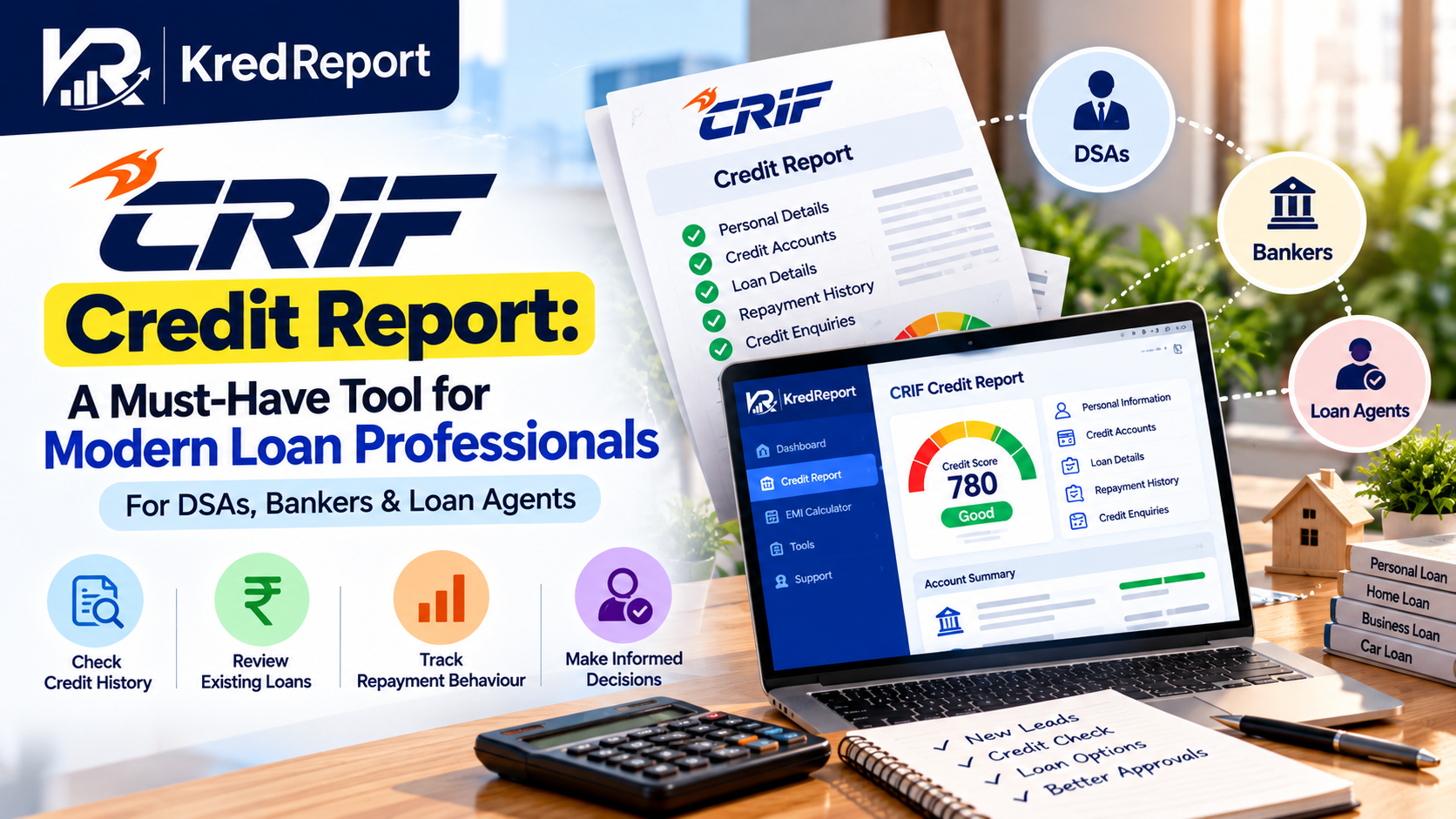
For DSAs, bankers, and loan agents, a CRIF credit report provides useful information about a customer's credit history, existing loans, and repayment behaviour. It helps you understand the customer's financial situation before moving forward with a loan application.
Let's understand why a CRIF credit report is useful in everyday loan processing.
What Is a CRIF Credit Report?
In simple words, a CRIF credit report gives you an overview of a customer's credit history based on the information reported to CRIF.
It may include details about existing loans, credit cards, repayment history, outstanding balances, and recent credit enquiries.
For example, a customer may tell you that they have only one ongoing loan. But when you review their credit report, you may find other reported credit accounts that need to be checked.
This information helps you ask the right questions and understand the customer's financial situation more clearly.
Why Do Loan Professionals Need a CRIF Credit Report?
1. Understand the Customer's Credit History
Before processing a loan application, it helps to know how the customer has managed their previous loans and credit cards.
A CRIF credit report can show reported repayment details, including delayed payments or overdue accounts.
If you notice something unusual, you can discuss it with the customer and understand the situation before proceeding.
This doesn't automatically mean the loan will be rejected. It simply helps you understand the customer's credit history better.
2. Check Existing Loans and EMIs
Imagine a customer earns ₹40,000 per month and wants to apply for a personal loan. However, they already have two ongoing EMIs.
These existing payments may affect how much additional EMI they can manage.
A CRIF credit report can help you identify reported credit accounts. You can then review this information alongside the customer's salary, bank statement, and other financial details.
This makes it easier to have a realistic conversation about the customer's loan requirements.
3. Identify Problems Before Submitting the Application
Sometimes, a credit report may show a delayed payment, an overdue account, or a loan that the customer believes has already been closed.
If you notice these details early, the customer gets an opportunity to check whether the information is correct.
If something is wrong, they can contact the relevant lender or credit bureau to request a correction.
Checking these details beforehand can help avoid confusion later in the loan process.
4. Help Customers Understand Their Loan Eligibility
Many customers believe that having a good credit score is enough to get a loan. But that's not always the case.
Lenders also consider income, existing EMIs, employment or business stability, documents, and their own eligibility criteria.
By reviewing the credit report along with these details, loan professionals can have a better understanding of the customer's profile.
Remember, the report can help with the initial assessment, but it cannot guarantee loan approval.
How Does a CRIF Credit Report Help DSAs?
DSAs deal with different customers and loan requirements every day. Before forwarding an application to a lender, they need to understand whether the customer's profile meets the lender's basic requirements.
A CRIF credit report can help DSAs review the customer's reported credit history and existing loans.
For example, if a customer has several ongoing EMIs, the DSA can discuss those commitments before moving ahead. If the report shows a payment delay, they can ask the customer for clarification.
This helps DSAs have better conversations with customers and prepare more complete applications.
Why Is It Useful for Bankers?
For bankers, checking a customer's financial background is an important part of assessing a loan application.
A CRIF credit report provides additional information about reported loans, repayment history, and outstanding balances.
Bankers can review these details along with salary slips, bank statements, income documents, and internal lending policies.
If the information in the report doesn't match what the customer has provided, the discrepancy can be checked before the assessment is completed.
In short, the report gives bankers another source of information to consider when reviewing a customer's application.
How Can Loan Agents Benefit from Credit Reports?
Loan agents often help customers understand the loan application process, collect documents, and explore suitable loan options.
But sometimes, customers themselves may not know how their existing loans or repayment history affect their applications.
A credit report can help loan agents identify details that may need attention.
For example, a customer may have a good salary but several existing EMIs. Another customer may have a delayed payment that needs clarification.
Understanding these details helps agents guide customers more effectively and explain why a lender may need additional information.
Credit Score vs. Credit Report: What's the Difference?
Many people use the terms credit score and credit report interchangeably, but they are not the same.
A credit score gives a numerical overview of a person's credit profile. A credit report provides more detailed information about their reported credit history.
Here's a simple comparison:
| Credit Score | Credit Report |
|---|---|
| Gives a quick numerical overview | Provides more details about credit history |
| Helps understand credit risk at a glance | Shows reported credit accounts and repayment information |
| Doesn't explain every detail | Can help identify entries that need checking |
| Is one factor in loan assessment | Supports a broader review of the customer's financial profile |
That's why loan professionals should look beyond the score and consider the customer's overall financial situation.
Can a CRIF Credit Report Guarantee Loan Approval?
No. A CRIF credit report cannot guarantee loan approval.
Every lender has its own rules and eligibility requirements. A customer's income, existing EMIs, repayment capacity, employment or business profile, and documentation also play an important role.
Even if a customer has a good credit score, the lender may need to check other details before making a decision.
The purpose of reviewing a credit report is to understand the customer's credit history better, not to predict or promise approval.
Make Loan Processing Easier with KredReport
For DSAs, bankers, and loan agents, understanding a customer's financial background is an important part of the loan process.
A CRIF credit report can help you review reported credit accounts, repayment history, and existing financial commitments. When you combine this information with income documents and other relevant details, you can get a clearer picture of the customer's profile.
KredReport offers useful services for finance professionals, including credit-report services and an EMI calculator.
If you're looking for practical tools to support your everyday loan-processing work, visit KredReport.com and explore the available services.
Final Thoughts
Processing a loan involves more than collecting documents and checking a credit score. You also need to understand the customer's credit history and existing financial commitments.
That's why a CRIF credit report can be a useful tool for modern loan professionals.
Whether you're a DSA, banker, or loan agent, reviewing the report can help you ask the right questions, identify details that need verification, and guide customers more effectively.
A credit report doesn't guarantee loan approval, but it can help you understand the customer's financial background before taking the next step.
Frequently Asked Questions
1. What is a CRIF credit report used for?
A CRIF credit report helps review reported credit accounts, repayment history, outstanding balances, and other credit-related information.
2. Why should DSAs check a credit report?
It helps DSAs understand a customer's reported credit history and existing loans before moving forward with an application, subject to the relevant access and authorisation requirements.
3. Is a credit score enough to assess a loan application?
No. Lenders also consider income, existing EMIs, repayment capacity, documents, and their own eligibility criteria.
4. What if a credit report contains incorrect information?
The customer should verify the entry and contact the relevant credit bureau or reporting lender to request a correction.
5. Does a good credit score mean a loan will be approved?
No. A good score may be helpful, but the final decision depends on the lender's requirements and the customer's overall financial profile.
